As this year’s International Women’s Day and Mother’s Day fell just a week apart, I felt inspired to turn it into a weekend escape. I needed me some nature magic after days on end without the sun that fell upon the UK. Somewhere close to Edinburgh, yet far enough for the air to feel different.
'By yon bonnie banks and by yon bonnie braes
Where the sun shines bright on Loch Lomon'
Where me and my true love will never meet again
On the bonnie, bonnie banks o' Loch Lomon'
Loch Lomond and The Trossachs, with their fairy paths, Devil’s Pulpit, and whispers of folklore, sounded more than promising.
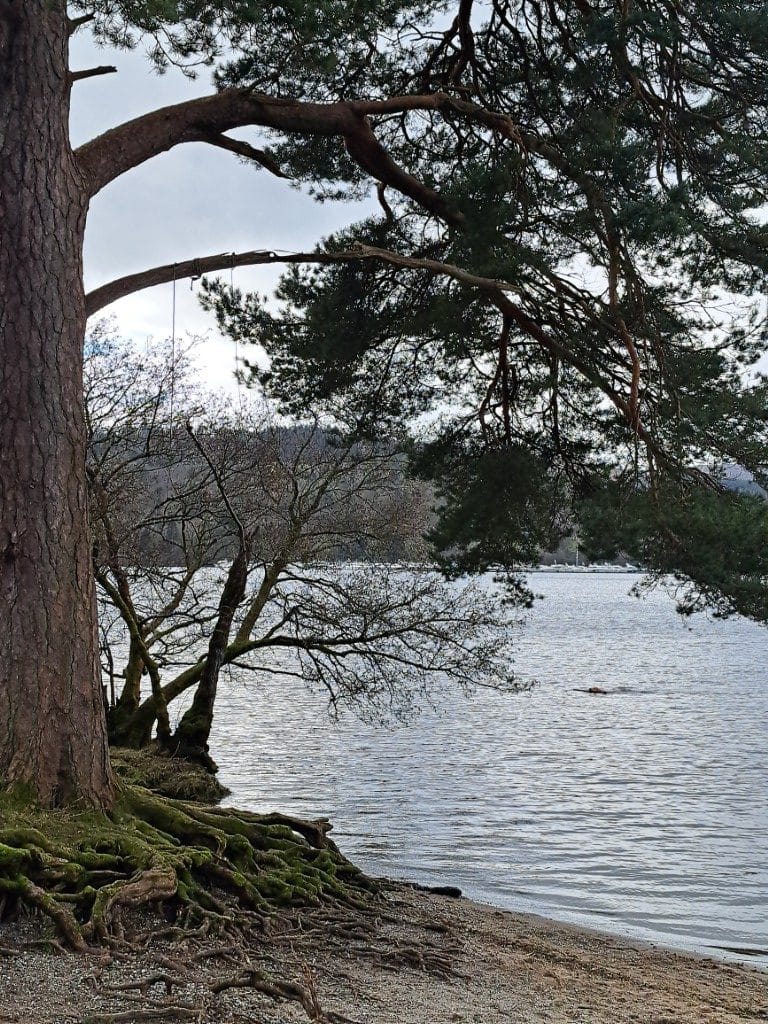
With it still being early March, the Fairy Path was closed, so our first stop became an acclimatising wander along the bonnie banks of Loch Lomond. If the first loch that comes to mind when you think of Scottish water monsters is Loch Ness… think again.
Not only is Loch Lomond famous for “waves with no wind” and “fish without a fin,” it also has its own monster. As we gazed across the surface, quietly hoping to spot at least an ear or ripple of this supposed giant, crocodile or plesiosaur, depending on who you ask, we learned that the “fish without a fin” actually refers to native adders, which have been seen swimming here on many occasions..
Not this girl. Snakes send me firmly in the opposite direction. There was just enough sun to visit a place where, legend has it, the Devil himself once stood to preach.
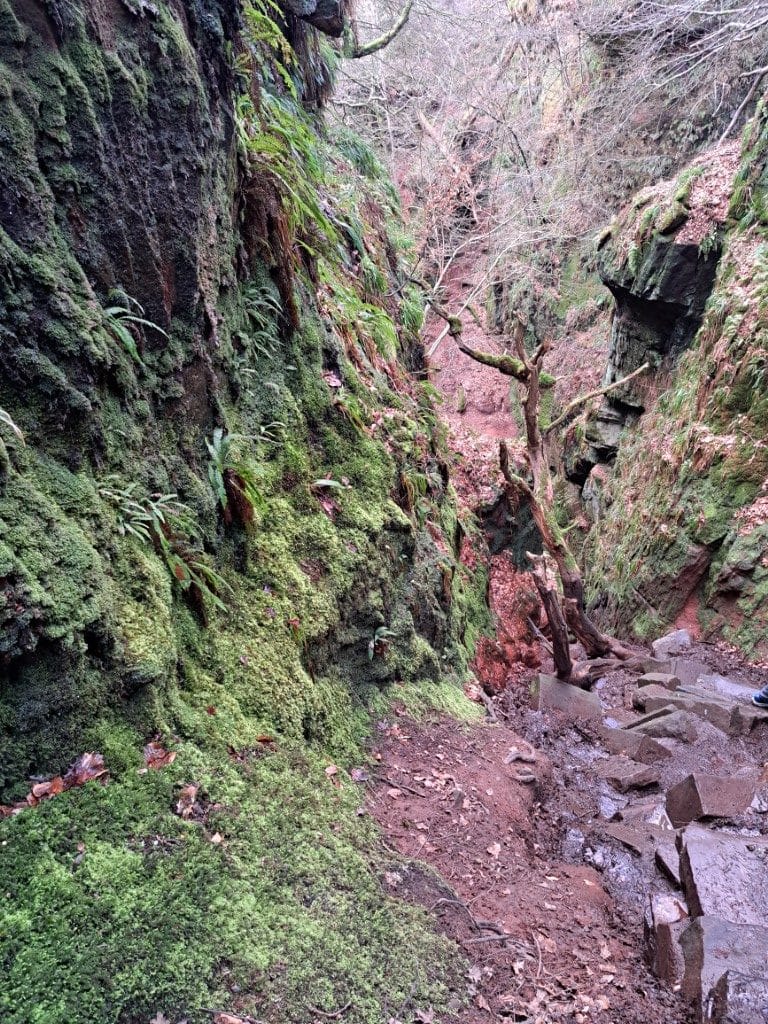
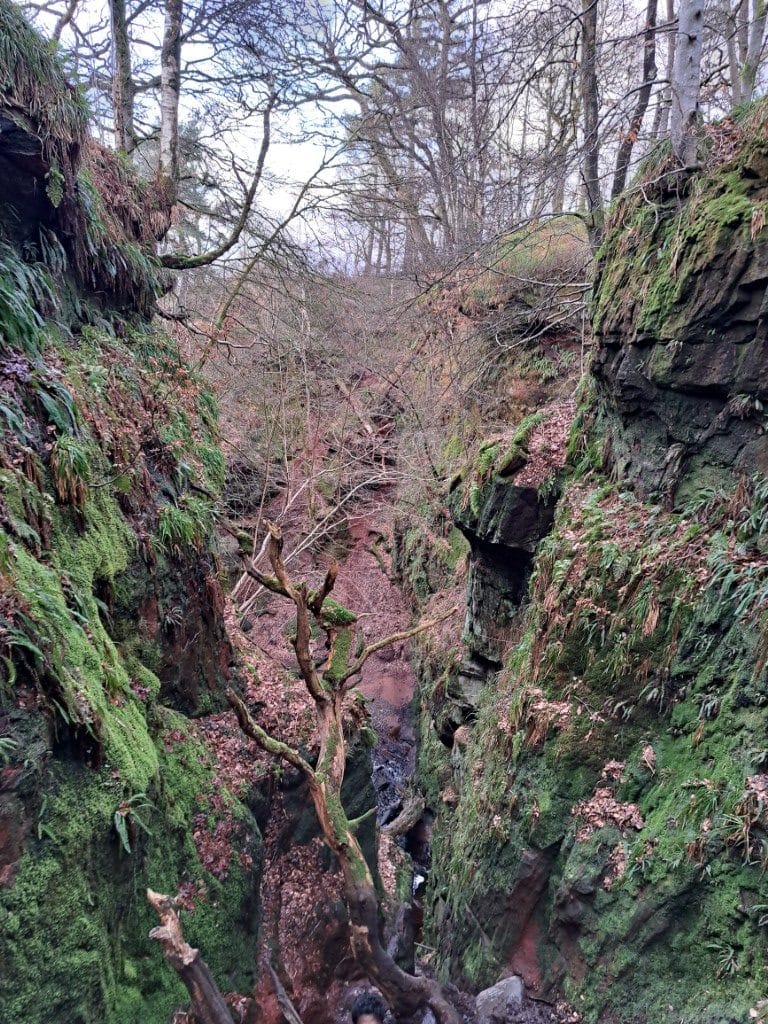
The first glimpse into the 70-foot-deep gorge was a strange mix of awe and fear, pulsing just beneath the skin as I realised how close I stood to the edge. It was a fleeting moment before we found ourselves navigating mud towards the narrow stone staircase known as Jacob’s Ladder — the only way down to the Devil’s Pulpit.
But something has shifted since becoming a parent. As much as I longed to breathe in the atmosphere of a place once tied to ancient rituals, the sight of those crumbling steps, worn, unstable, and slick with rain, stirred a quiet unease. This was not the moment.
I find it imperative to say that even without the descent, Finnich Glen is well worth the visit. If you want to truly feel its magic, go early. Fewer people, more stillness and more enchantment.
That night, sleep didn’t come easily. Whether it was the thought of that beautiful beast hiding somewhere in the impressive depth of 190 metres – for comparison that’s enough to submerge two Big Bens, even rival the height of the Great Pyramid of Giza; or simply the flicker of alarm lights in our room, I couldn’t quite tell.
Still, morning came, and with it, a surprising burst of energy. A spontaneous plan formed: a 500-step climb to the summit of White Tower Crag at Dumbarton Castle on our way back to Edinburgh. Honestly, it felt like the only reasonable way to recover from a full Scottish breakfast.
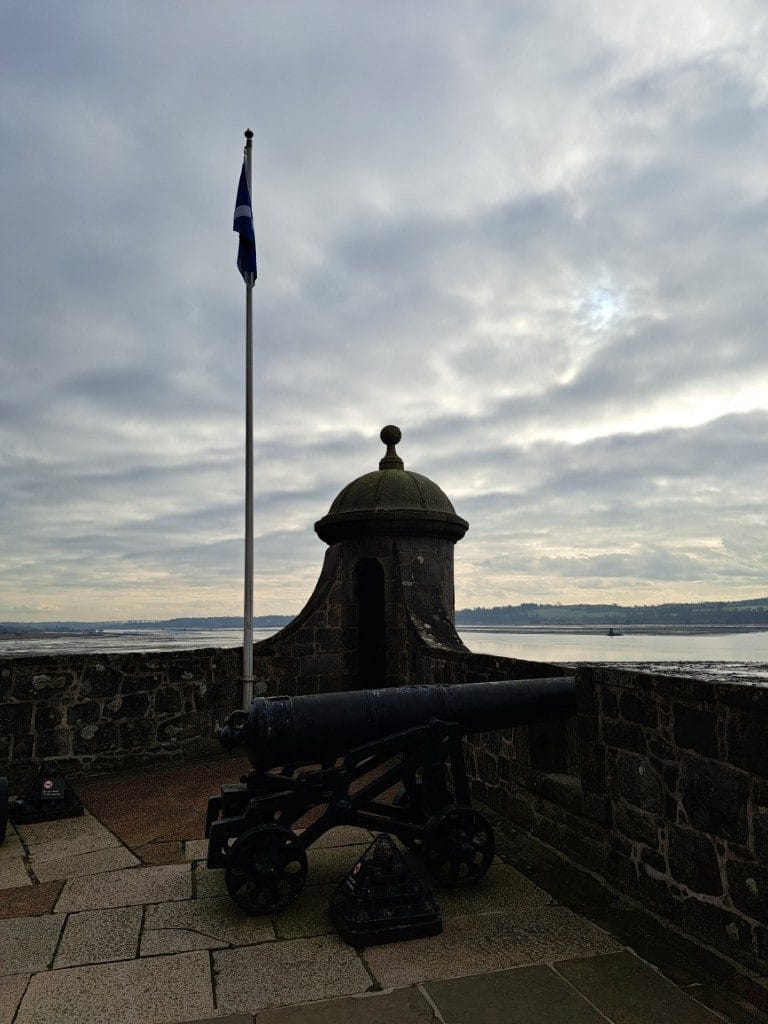
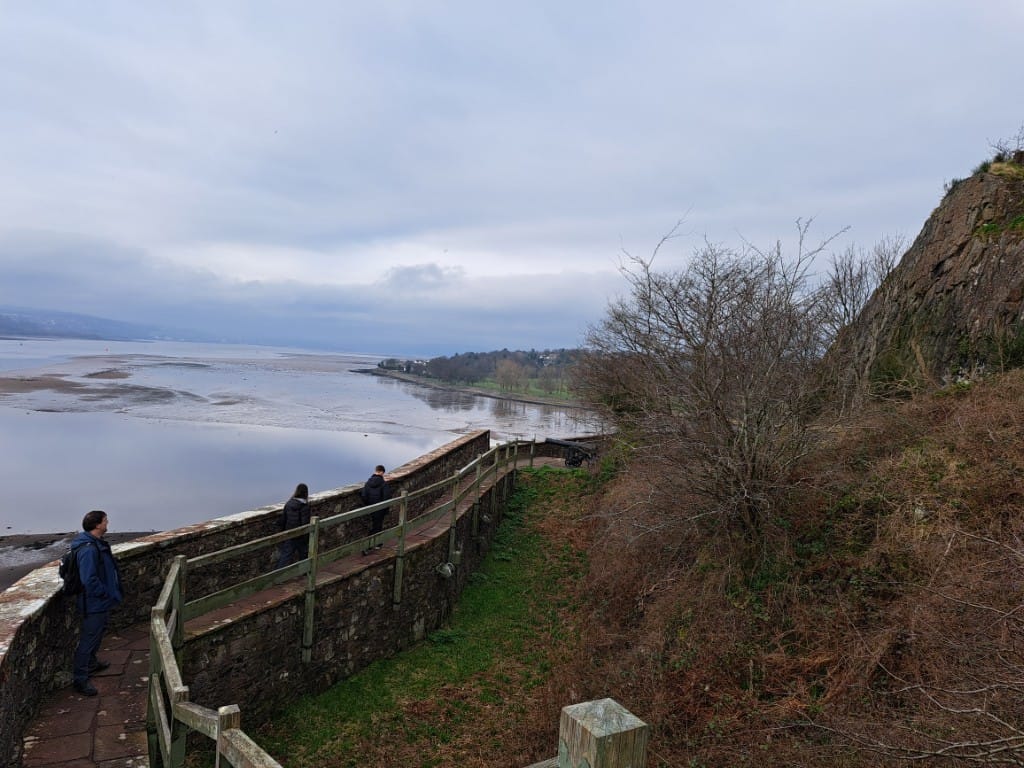
We approached one of Scotland’s longest-standing strongholds, words like mighty and breathtaking forming easily, careful not to glance the other way at the perfectly trimmed bowling green that threatened to break the spell.
It wasn’t hard to imagine Merlin himself conjuring dragon-breath enchantments standing on this volcanic rock. (while reading this please feel free to mutter in a deep voice Anál nathrach, orth’ bháis’s bethad, do chél dénmha.)
Now, I shared with my children the tale of how the rock beneath Dumbarton Castle was once just a pebble in the Devil’s hand, torn from the hills in a furious attempt to strike down St. Patrick, but missing its mark. What I didn’t share… was the climb we were about to attempt.
As it turned out, the Devil had other plans for us that weekend. Due to staff shortages, the castle steps were closed, leaving those hundreds of stairs untouched by our wee feet.
But sometimes the best parts of a trip are the unplanned ones. We had plenty of time to go and explore one of the places recommended by locals, and it did not disappoint. Mugdock Country Park.
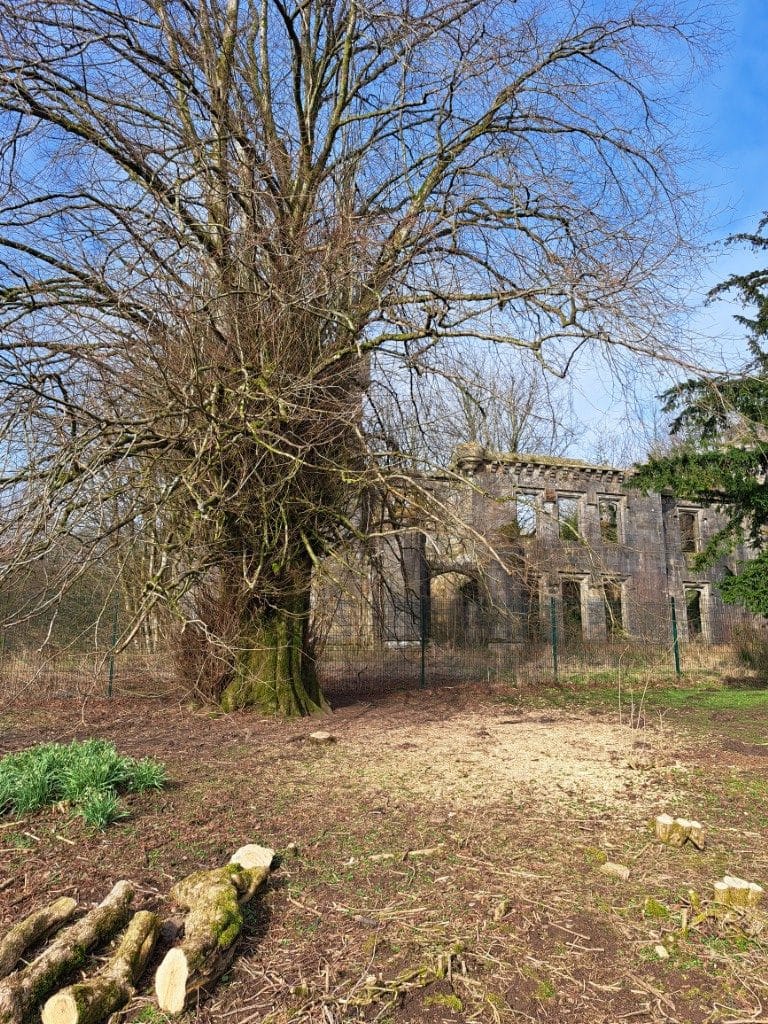
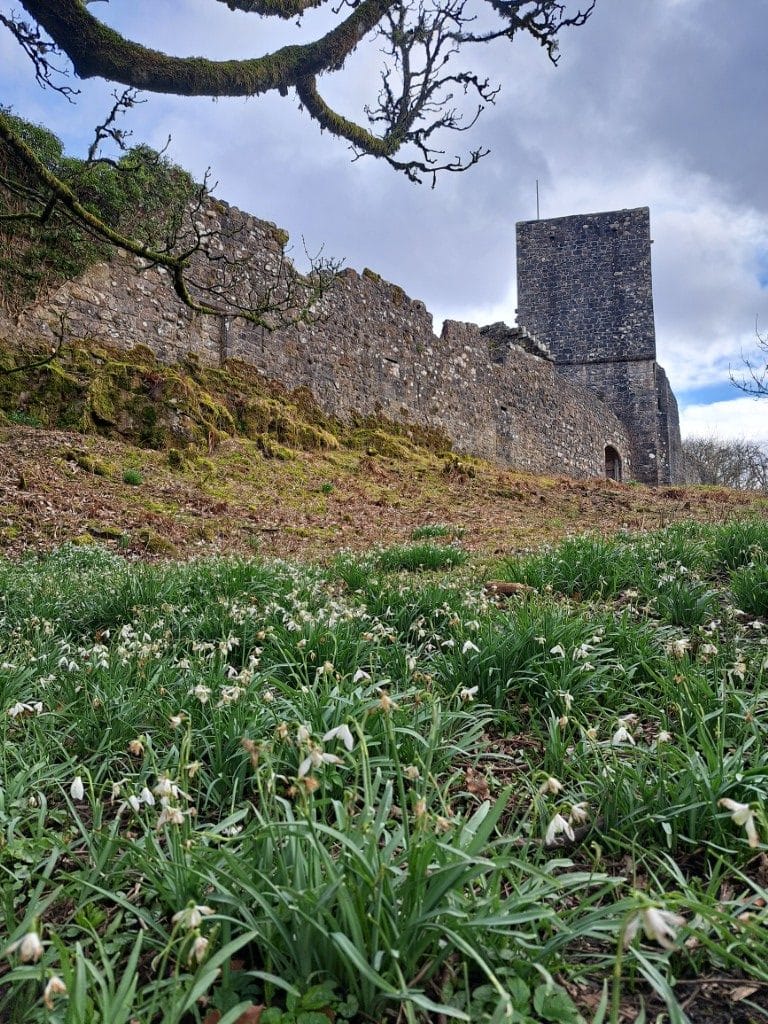
We’ve visited plenty of country parks, but this one carries stories you don’t quite expect. We grabbed £4 burgers (they were awesome!) and coffee in what used to be the stables of a former zoo. I’m still not sure which is more surprising: the price, or the fact this once was a zoo.
Back in 1948, Andrew Wilson and his zoologist son William transformed the area into a zoo housing everything from lions to crocodiles and chimpanzees. We’re not a family fond of zoos, and seeing the remains of those old enclosures, small, inadequate, now crumbling, made it clear that perhaps the best thing that ever happened here was its closure just six years after opening.
But one story lingers. Memory of Charlie the elephant.
Charlie lived in the stables alongside his keeper, Singh Ibrahim, and was said to be inseparable from him. So inseparable, in fact, that when Singh once went for a drink in a nearby pub, Charlie quietly followed him into town. Surprising fact..he wasn’t noticed. Not until he tried to walk into the pub.
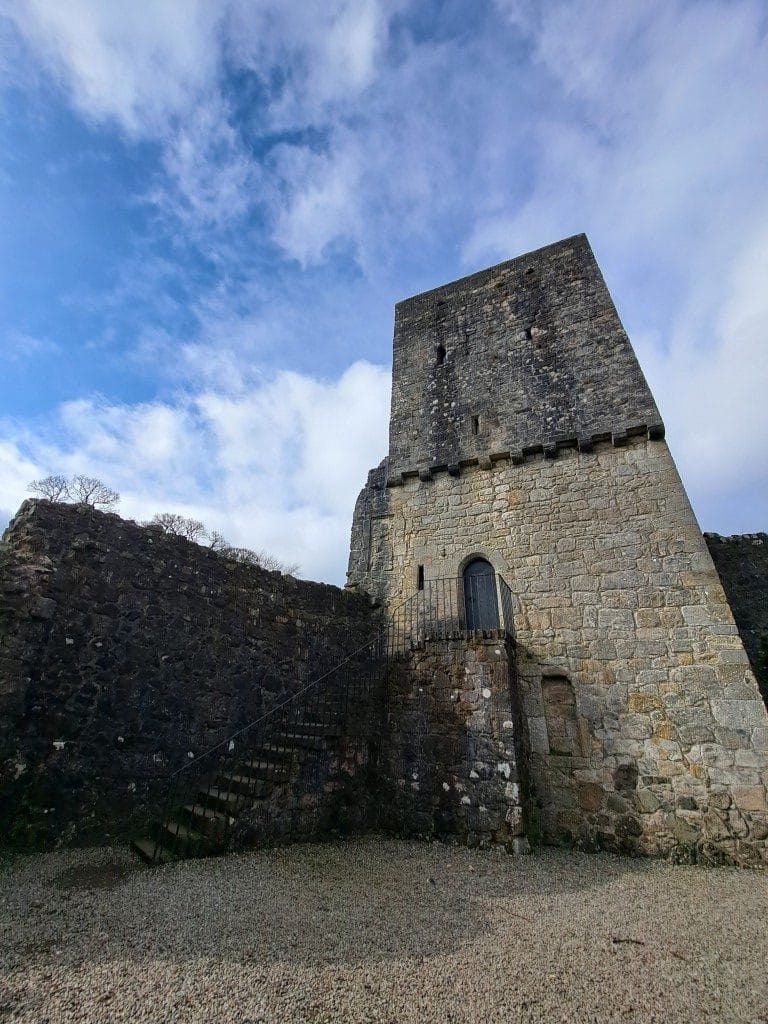
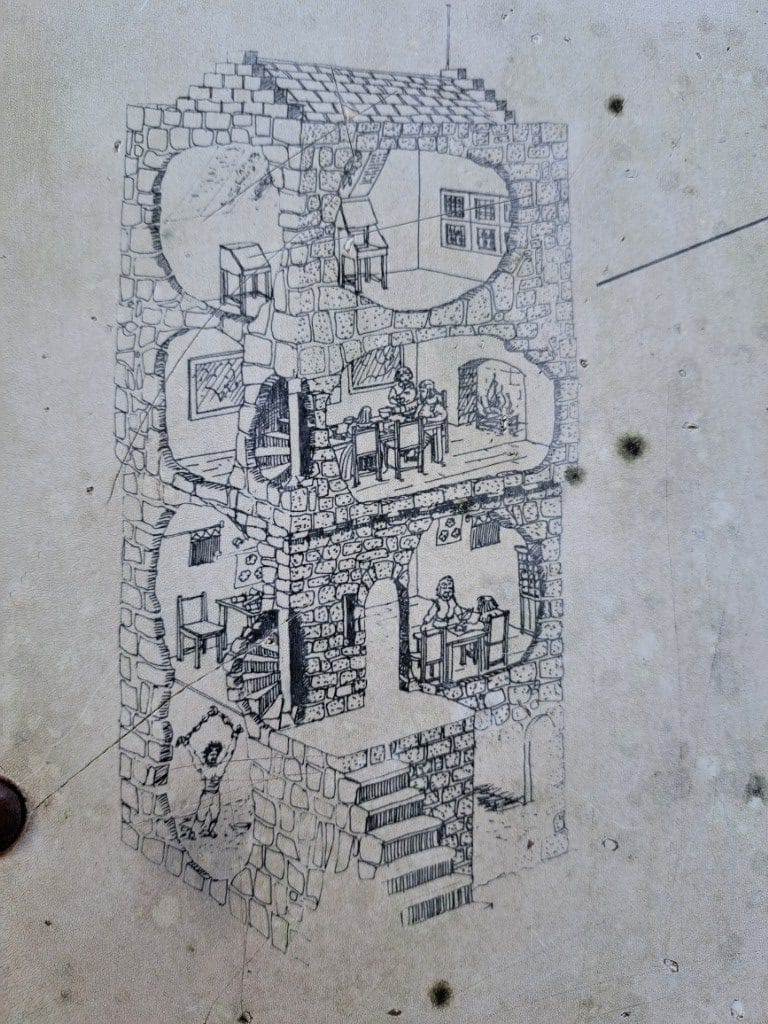
Another ruin in the park is the 19th century Craigend Castle. No ghost stories, no eerie encounters, just a glimpse of a very different way of life. A time before Netflix, when “entertainment” might have included a torture or two of prisoners in the basement. Both Castle and the nearby remains of an anti-aircraft gun site from WWII sit silent, until now and then they each become battlefields for Nerf gun wars of local children. Holding space in history.
And with that, we leave Loch Lomond and its beautiful surroundings behind — for now. But like any lover of mystery and myth, we’ll be back. Waiting for that perfect moment of stillness… when the water is quiet, and something beneath the surface finally moves.
Leave a Reply