Maybe you have just one afternoon to spare in the Zadar area. Maybe you’re the kind of person who takes food seriously — really seriously. Or maybe what you love most about travelling is the moment you step into someone else’s ordinary life and find it extraordinary. Any of these paths leads to the same place: an OPG.
OPG stands for Obiteljsko Poljoprivredno Gospodarstvo — a Family Agricultural Holding, or simply a family farm. In Croatia, OPGs are small, working farms that produce and sell their own food directly. They are not tourist attractions. They are people’s lives, and that is precisely what makes them worth visiting.
Two OPGs stole our hearts completely — OPG Mate Gašpar and OPG Ćusa, also known as Lolina Vatrenica. The day we spent between them felt like travelling back in time. We didn’t want to leave.
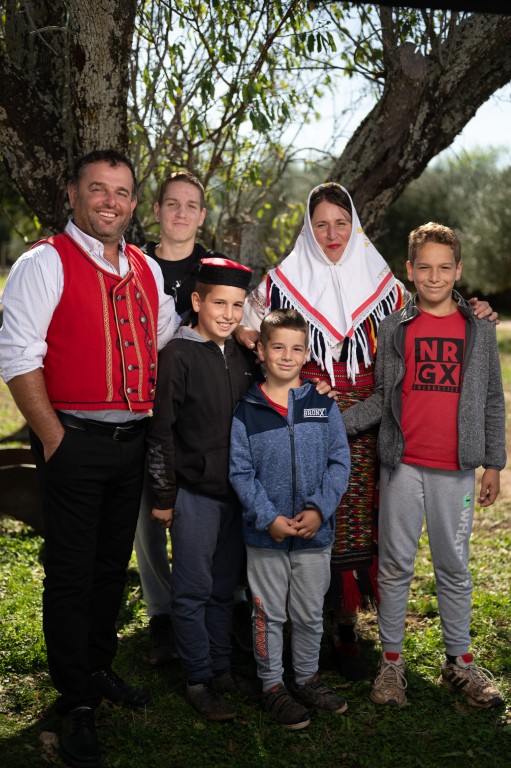
The Gašpar OPG family — five boys, one tractor, and a lot of sheep
The Gašpar family are one of those rare households where warmth feels entirely effortless. Five sons take the family sheep out to graze every day, carrying with them not — no, not phones — but books, so they can study while they watch the flock. These boys know everything there is to know about growing vines, shearing sheep, and would almost certainly thrive if left alone on a desert island.
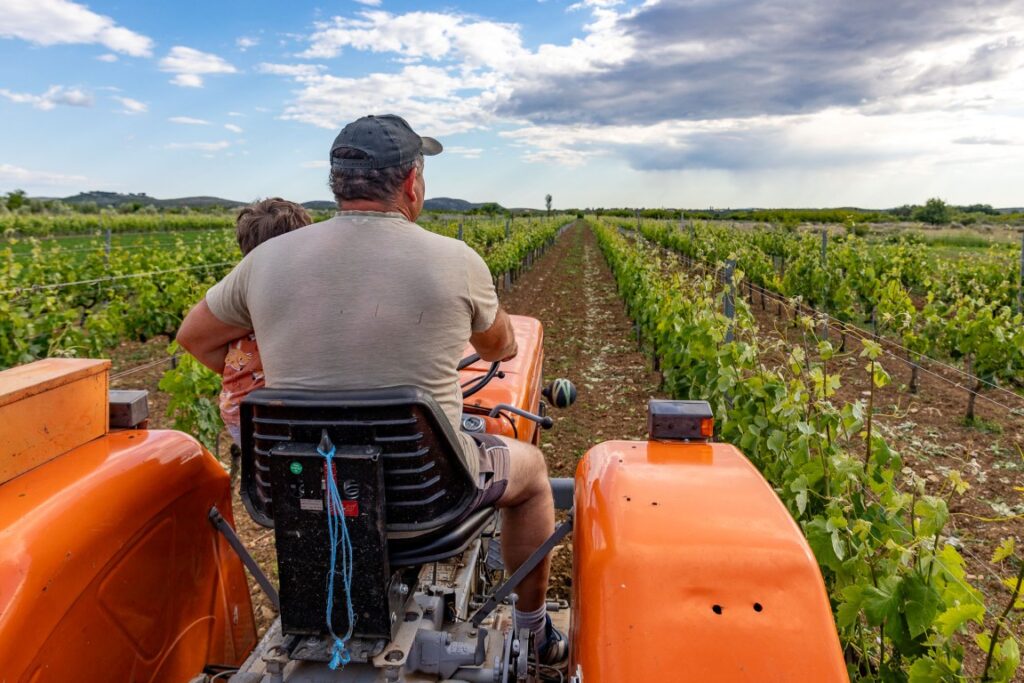
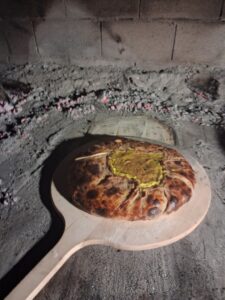
The youngest of the five tours the farm in a big tractor with his father, when he isn’t helping his mother prepare bread under the peka. What do they love most? If the answer lies in what they saved up for months to buy, it’s the tractor. After a ride in it ourselves, we completely understood why.
Peka (or ispod peke – meaning “under the bell”) is a traditional Croatian method of slow-cooking food, most famous in the Dalmatia region. The word “peka” refers to a heavy, dome-shaped lid made of cast iron or clay. Food is placed in a round tray, covered with this heavy lid, and cooked in an open fireplace by piling hot embers and ash directly on top of it.
Lolina Vatrenica — and the milk you never expected to love
Have you ever tried donkey milk? Most people haven’t, and we’ll admit the idea produced some interesting expressions on our faces too. But a visit to Lolina Vatrenica — a traditional stone house with a hearth where fish and meat are smoked and roasted — turned us into genuine converts.
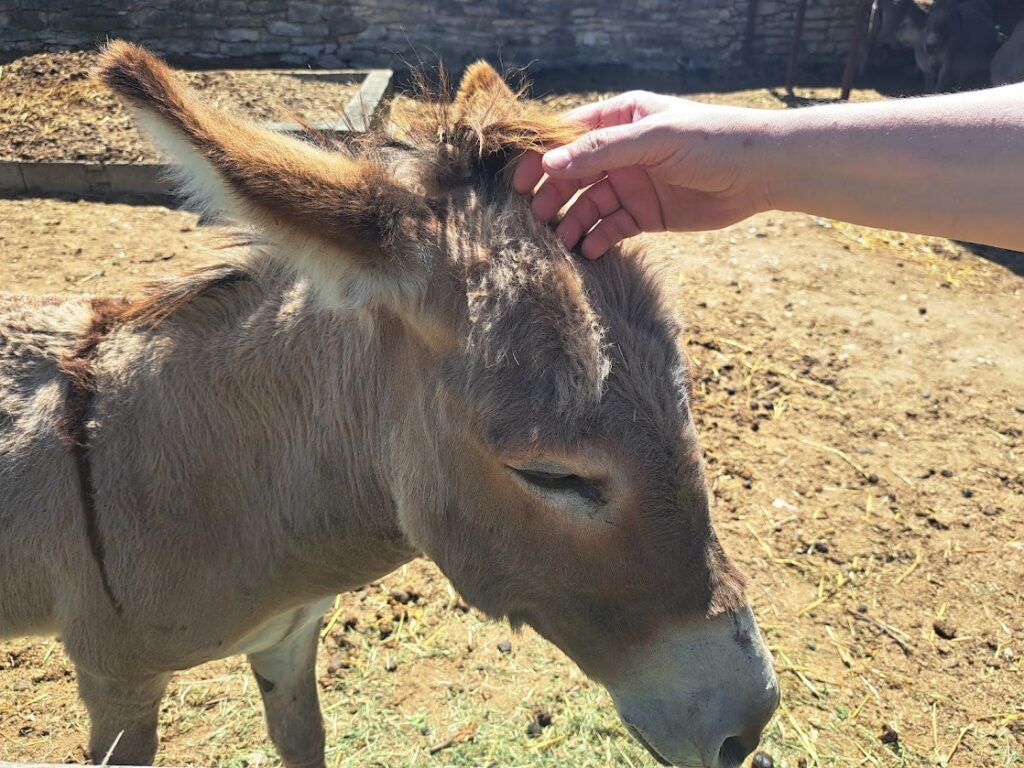
While we stroked the donkey and, with a healthy degree of caution, fed her by hand in what felt like 30 degrees of shade, we learned that donkey milk is not only an excellent hypoallergenic alternative for those with cow’s milk protein allergies, but is also remarkably gentle on digestion and a powerful natural immune boost. It is one of the rarest and most nutritious milks in the world.
The table that appeared like magic
The whole experience, we agreed afterwards, returned us to something from childhood — a simpler, slower way of being. And then the smell reached us from the kitchen. Freshly baked bread, meat roasting slowly under the peka, the quiet sounds of a family at work.
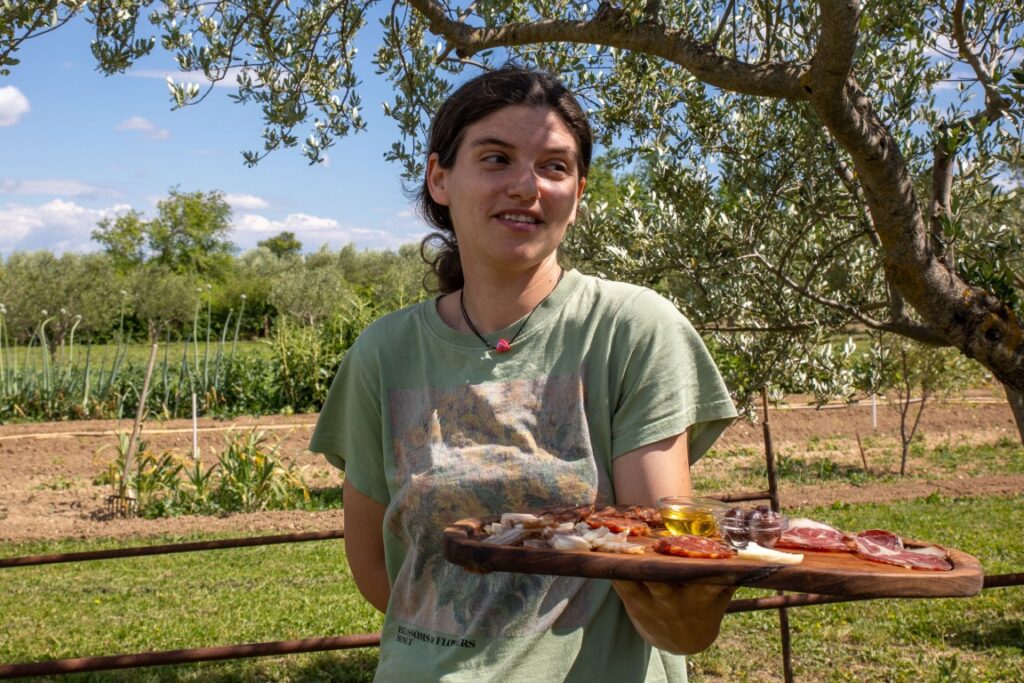
We settled at the table. Doris and Antonia — each in her own home — brought out the specialities of this part of Dalmatia, and whatever restraint we had arrived with dissolved immediately.
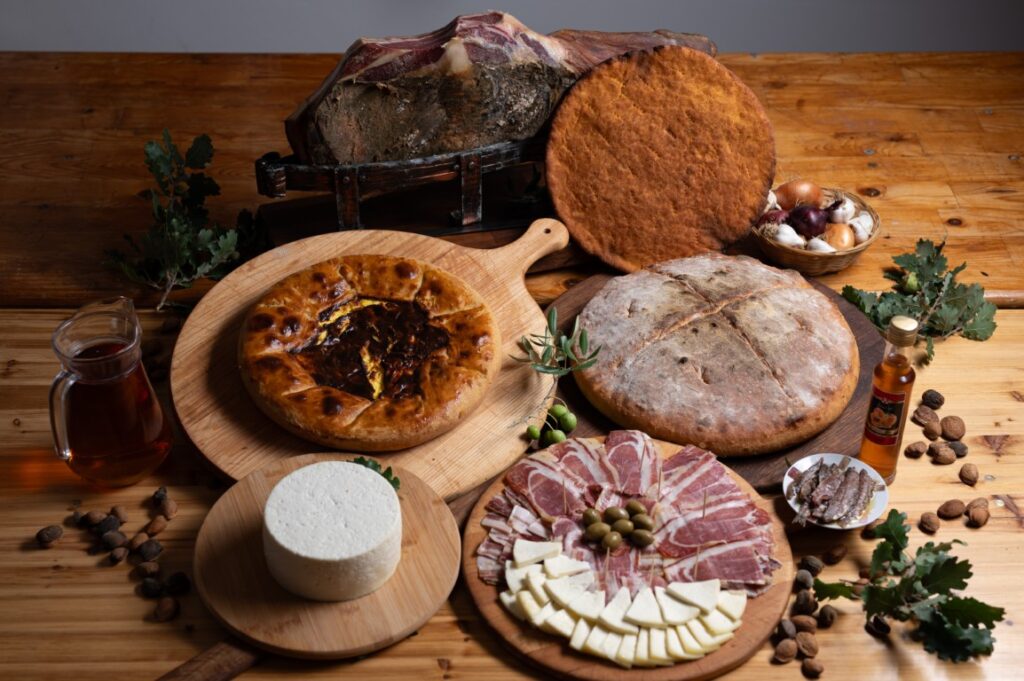
Before us was a spread of freshly baked bread, cured meats, lamb and veal slow-cooked under the peka, dishes that have, we were told, occasionally caused even committed vegetarians to reconsider, and two things we hadn’t encountered before.
The first was priska, a traditional unleavened flatbread made from flour, water and salt, baked under a cast-iron lid. Simple, ancient, and somehow deeply satisfying.
The second was benkovački prisnac — a local delicacy from the small Croatian town of Benkovac, made to a recipe that is 150 years old and passed down from mother to daughter, mother-in-law to bride, with small variations that make each family’s version subtly, distinctively their own. The dough is made from cornflour, eggs, sour cream, salt, oil and fresh cheese. There is a sweet version too, where salt gives way to sugar. In the past, prisnac was made on Sundays, when the whole family gathered. Now it is offered to guests — making you, for an afternoon, part of the family too.
Visiting a family farm is one of the experiences we include in our eight-day Croatia tour. Check the itinerary here for more details.
Leave a Reply