
Most people who visit the Adriatic coast see the fishing boats from a distance. White hulls bobbing in the harbour at dawn, nets piled on the quayside, a figure moving quietly in the early light. They photograph it, perhaps, and walk on to find breakfast. We went a different way. We went for a morning fishing with local fisherman with Dašo in Starigrad Paklenica.
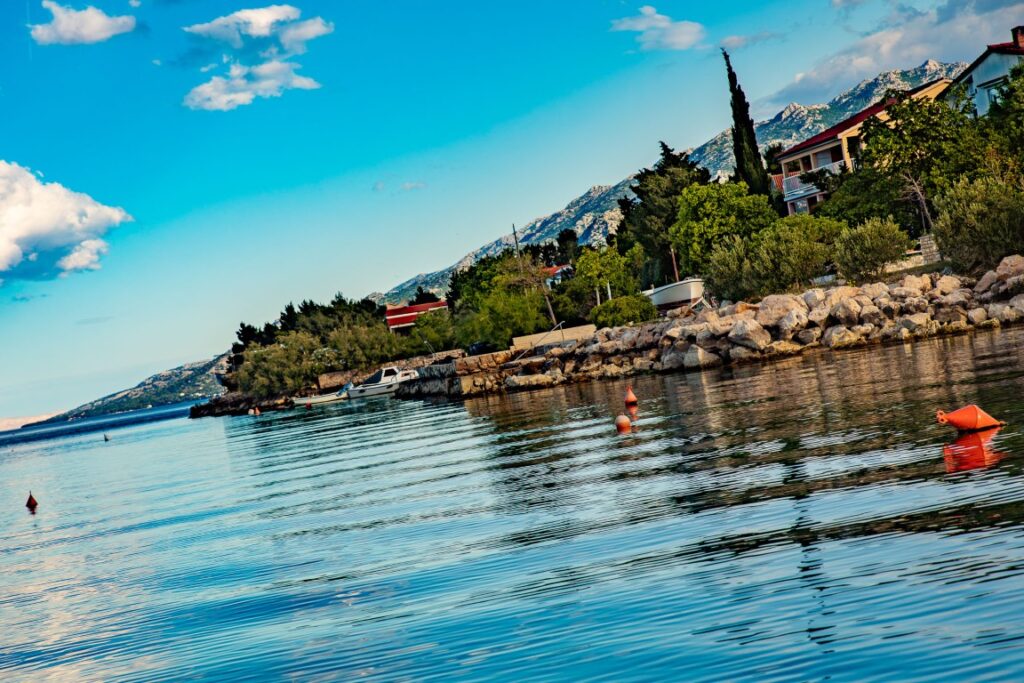
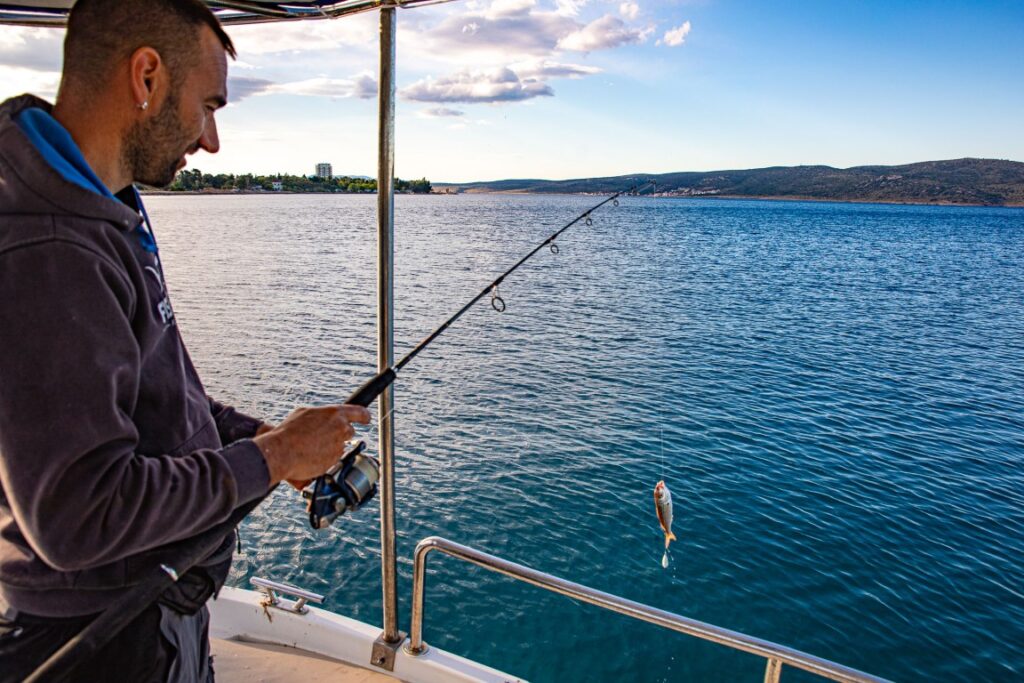
Dašo has been fishing around Starigrad Paklenica his whole life. He knows the Adriatic the way most of us know our own kitchens, by instinct, by feel, by the particular quality of the light on the water at a specific time of morning. Ask him when the best time to fish is and he doesn’t hesitate. “Early,” he says. “Before the sun is high. The fish are moving, the sea is calm, and there is nobody else out there. That hour belongs to the fishermen.”
What actually happens on the water
We meet at the harbour before most of the village is awake. The boat is small and honest — no frills, no tourist modifications, just the equipment of a working fisherman’s morning. Dašo uses traditional traps and nets, set the evening before and checked at first light. There is a particular satisfaction, we discover, in pulling a trap from the water without knowing what’s inside. It is the oldest kind of surprise.
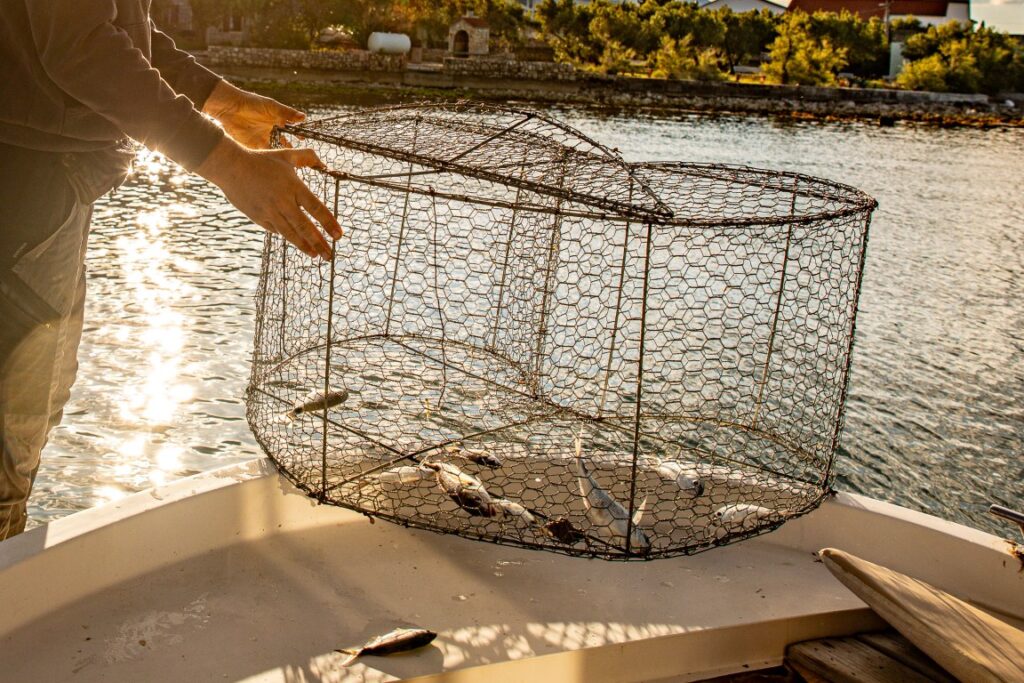
The most likely catch around Starigrad, Dašo tells us, includes scorpionfish, sea bass, bream, and various smaller reef fish, creatures that have lived in these particular waters for as long as anyone can remember. Some go back. “If it’s too small, or if there are too few of them in this spot, you return it,” he explains, with the matter-of-fact pragmatism of someone who understands that the sea needs to be treated fairly if it is going to keep giving. “My father fished here. I fish here. Someone after me will fish here. You don’t take more than the sea can give.”
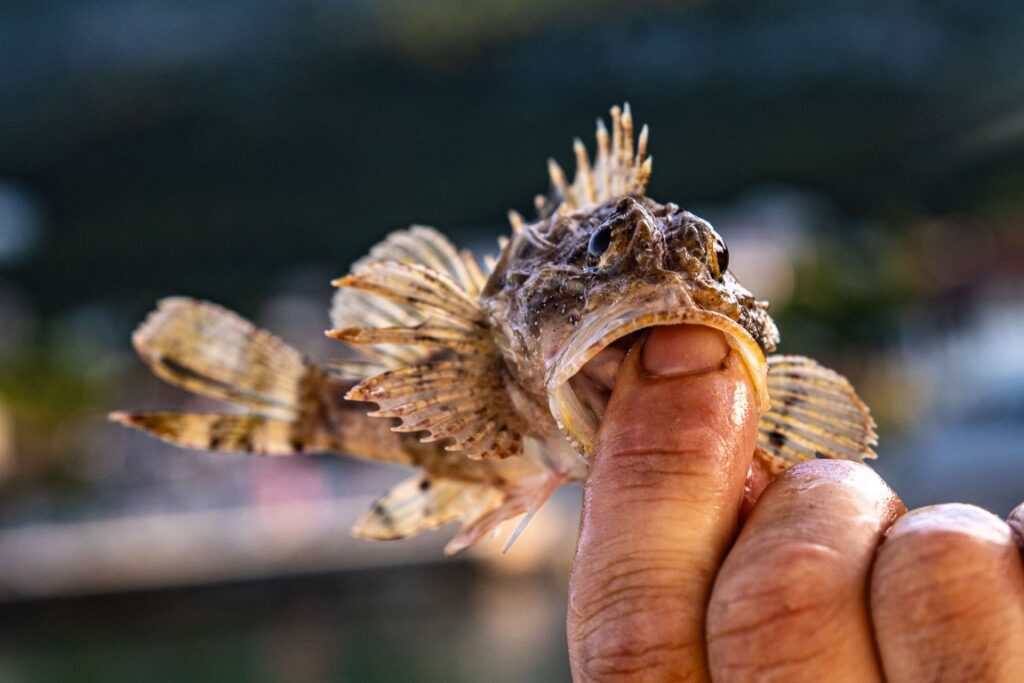
Can you fish at night? Yes, he says. Night fishing is a different experience entirely, quieter and stranger, with different species drawn to the surface by the darkness. But morning is what he loves. “At night you fish. In the morning you are also just… there. On the water. It is hard to explain.”
He doesn’t need to explain. Anyone who has been on a small boat at dawn, with the mountains behind the village still in shadow and the sea completely flat, will understand exactly what he means.
Cleaning the fish, and the question everyone asks
Is it hard to clean a fish? Dašo finds this question quietly amusing. “The first time, yes. After that, no. Your hands learn.” He demonstrates with the unhurried patience of someone who has done this ten thousand times, and within twenty minutes, several of us have learned something we did not know before breakfast.
Will you be able to fish on your own after a morning with Dašo? Probably not independently, he admits with a grin. There are years of reading the water and knowing the spots that no single morning can teach. But you will understand what fishing actually is, which is more than most people ever get. “People think fishing is waiting,” he says. “It isn’t. It is paying attention.”
Back on shore, cooking what we caught
What happens next is, if anything, even better than the morning on the water. Back at the harbour, with the catch laid out and the sun finally properly up, we cook together. Dašo’s preferred method for a fresh catch is simple to the point of being almost severe — good olive oil, garlic, salt, and time. “Fresh fish doesn’t need much,” he says. “If you need to hide what something tastes like, it wasn’t fresh to begin with.”
We eat at a table by the water. The fish came out of the sea less than two hours ago. There is bread, there is local wine, and there is the particular satisfaction of a meal you had a genuine hand in making.
Someone at the table says it is the best fish they have ever eaten. Dašo nods, unsurprised. “It usually is,” he says.
The most unexpected thing
We ask Dašo what is the most unexpected thing that has ever happened to him out on the water. He thinks about it for a moment — genuinely thinks, rather than reaching for a ready answer.
“Once, very early in the morning, I pulled up a net and there was an octopus inside that was so large I couldn’t believe it was real. I held it up and just looked at it for a long time. Then I put it back.”
When we asked why, he shrugged, almost embarrassed by the sentimentality of it. “Some things you just look at.”
Morning fishing with a local fisherman in Starigrad Paklenica is one of eight experiences included in our small-group Croatia tour. We run tours in September and October — maximum eight guests, no coaches, no compromises. Find here more about the itinerary and the dates.
Leave a Reply